Wellsite operator services cover the ongoing work of keeping producing wells running: scheduled daily and weekly checks, routine maintenance, compliance documentation, and 24/7 emergency response. A provider gauges wells, reads pressures, feeds chemical, swaps minor parts, and files the data regulators require. Across the Appalachian Basin, this work scales from a few vertical wells to clustered horizontal pads.
That is the short answer. What follows explains how the service works in the field, how it differs from roustabout work, and how to judge a provider.
What Do Wellsite Operator Services Include?
Wellsite operator services keep producing wells online through scheduled checks, routine maintenance, compliance reporting, and emergency response. A well tender runs a route, visiting each well on a set cadence and recording what the equipment is doing.
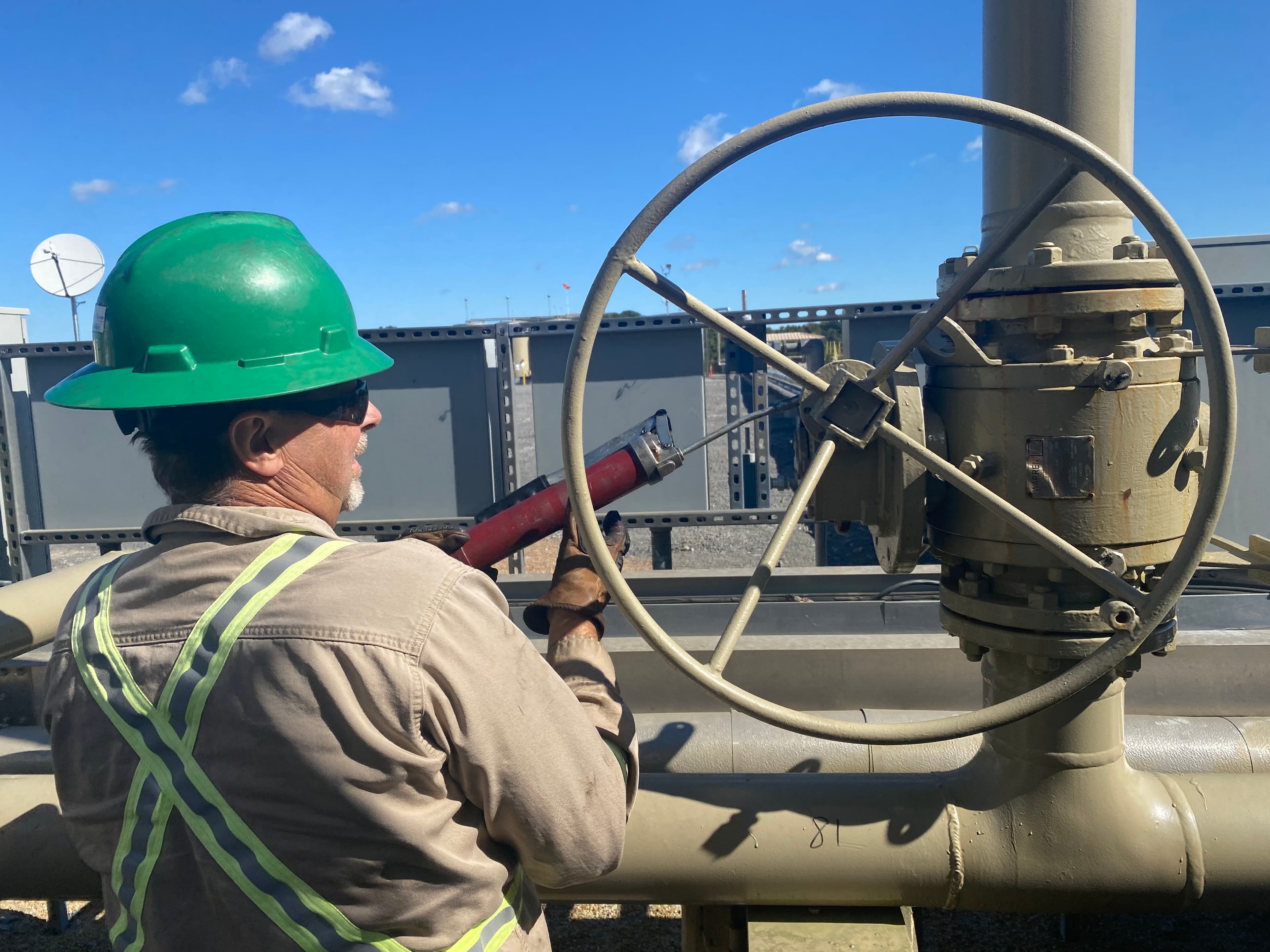
A typical daily route involves gauging production, reading tubing and casing pressures, checking separator and tank levels, verifying chemical injection, and inspecting valves and flowlines. The operator makes minor adjustments on the spot. That might mean tweaking a chemical feed rate, clearing a plugged line, or reseating a valve before it becomes a bigger problem.
Daily and weekly well checks
Daily and weekly checks catch small problems before they become shut-ins. The operator logs readings each visit, so a slow pressure decline or a creeping tank level shows up as a trend rather than a surprise failure.
Routine maintenance and minor repairs
Routine maintenance covers the work that keeps a well producing without a dedicated project crew. Think packing adjustments, seal replacements, chemical pump service, and small flowline fixes handled during the regular route.
Compliance documentation and reporting
Compliance falls to the field crew more than operators expect. Production data capture, spill prevention records, and the filings required under Pennsylvania DEP (Pennsylvania DEP) and federal EPA rules (EPA Oil & Natural Gas) all depend on accurate, dated field records.
The work scales. ShalePro manages more than 2,000 wells, conventional through Marcellus and Utica, so the same practice applies whether a client runs a handful of vertical wells or a cluster of horizontal pads. And emergency response is part of the service, not a separate add-on, with crews positioned across the field for 24/7 coverage.
Well Tending vs. Roustabout Services: What Is the Difference?
Well tending is ongoing, scheduled, maintenance-focused work. Roustabout services are project-based and equipment-intensive: tank battery work, equipment moves, facility buildouts, and site rework. One keeps a well running day to day. The other builds or rebuilds what the well needs.
| Well Tending | Roustabout Services | |
|---|---|---|
| Cadence | Scheduled, recurring routes | Project-based, as needed |
| Focus | Monitoring and minor repair | Construction, moves, buildouts |
| Equipment | Light tools, service truck | Heavy equipment, cranes, rigs |
| Trigger | Calendar and readings | A defined project scope |
The boundary blurs in practice. An emergency repair or an unplanned equipment swap can turn a routine visit into a project, and a scheduled check often surfaces a project-sized issue the crew did not expect.
That overlap is the case for a single provider. One crew, one safety program, one point of accountability, and no handoff gap when routine work escalates into a build. ShalePro performs these services in-house, so a client works with one accountable team from site preparation through long-term maintenance, with Mechanical Construction available when a job grows beyond the route.
"ShalePro has been a trusted partner for over a decade, consistently delivering well tending and roustabout services.". Brendan Burke, Vice President of Production, Seneca Resources Company, LLC
How Does 24/7 Emergency Response Work Across the Basin?
Real 24/7 response depends on where crews actually sit, not on a promise printed in a contract. Response time is a function of regional presence, so the footprint matters more than the marketing line.
ShalePro operates seven locations across four states. The network includes:
Corporate headquarters in Houston, Pennsylvania, near Pittsburgh West Alexander, PA fabrication shop and yard (Central Region)
Clarksburg, WV shop and yard (South Region)
Thompson, PA shop and yard (Northeast Region)
Field offices in Clintwood, VA; St. Marys, PA; and Kingsport, TN
Dispatch works through a crew on call, a route to the site, and direct coordination with the client. The structure matters because Appalachian terrain does not cooperate. Winter roads, mud season, and remote pads reached by gravel lease roads all stretch travel time, which is why regional shops beat a single central depot.
The geographic span runs from New York to Tennessee, with work across New York, Pennsylvania, Ohio, West Virginia, Virginia, Kentucky, and Tennessee. A multi-state portfolio needs crews distributed to match it.
How Wellsite Operations Integrate With Compressor and Pipeline Services
Wells feed gathering systems, and the interface between wellhead and pipeline needs coordinated operations. Upstream and midstream meet at that point, and a gap in coordination there becomes a production loss or a safety exposure.
Consider two common situations. A routine well check surfaces a compressor running hot downstream, and the same provider can address both without a second call. Or a pipeline pigging run requires a coordinated well shutdown and restart, timed so production does not back up into the facility.
For midstream operators, a single provider reduces vendor coordination and handoff risk. ShalePro delivers Well Tending, Compressor Operations, and Pipeline and Pigging Services under one operations and maintenance umbrella, operating hundreds of compressors and pipeline networks across the basin.
PHMSA governs pipeline safety on the midstream side (PHMSA), and GPA Midstream publishes the operating practices the sector relies on (GPA Midstream). This turnkey model is led by Matt Lowther, VP of Midstream and O&M Services. compressor operations and maintenance
What Does a Field Safety Program Look Like for Wellsite Operations?
A credible field safety program is built on leading indicators and daily practice, not on a single lagging statistic. The question to ask a provider is what crews actually do before and during every job.
ShalePro runs a leading-indicator program backed by a full, dedicated safety and training team in the field. Crews hold Daily Tailgate safety meetings, complete a thorough Job Safety Analysis before each job, and the program logs more than 500 field safety observations every quarter.
That dedicated team runs observations, incident management, and compliance directly, rather than leaving it to the client. The certifications that matter in vendor qualification are:
- ISNetworld Certified
- Veriforce Preferred
- DOT Compliant
- OSHA Compliant (OSHA Oil & Gas Extraction)
- Veriforce SafeLandUSA trained crews
For the client, a working safety program means smoother regulatory audits and reduced liability exposure when a provider's crews are on the lease. The Safety Department is led by Cooper Ferko, Director of Safety. field safety and operator qualification
When Should You Outsource Well Operations?
Outsourcing wellsite operator services often fits operators with dispersed well portfolios, small well counts that do not justify full-time staff, capital constraints that favor operating expense over headcount, seasonal operations, and companies without internal field safety infrastructure. If any of those describe your position, a service contract usually pencils out.
What to look for in a provider:
Regional presence inside the basin you operate in Integrated service lines across well tending, compression, and pipeline A field safety culture with certifications and a dedicated team Documented crew training and operator qualification Real emergency response capability, backed by crew positioning
The client typically keeps reservoir management and production optimization strategy in-house, while the provider handles field execution. You set the production targets. The crew keeps the wells meeting them.
ShalePro hires experienced tradespeople and people ready to learn, invests in training and certifications, promotes from the field, and cross-trains crews across service lines including well tenders, production operators, roustabouts, and field supervisors. ShalePro Energy Services is an energy and industrial services company serving the Appalachian Basin from Houston, Pennsylvania, specializing in mechanical construction, pipe fabrication, helical pile installation, and midstream operations and maintenance.
The long-term partnership framing is the point. The Seneca relationship, a trusted partner for over a decade, reflects what a sustained well operations contract can look like. well tending services
Frequently Asked Questions
What is the difference between a wellsite operator and a well tender?
The terms often describe the same field role. A well tender, or production operator, runs scheduled checks, routine maintenance, and compliance across a route of wells. Wellsite operator is a broader label for that ongoing field operations work, sometimes including project support and coordination with other service lines.
How much does it cost to outsource well operations?
Pricing varies by well count, service scope, and route geography. Contracts are commonly structured per well or on a time-and-materials basis. Operators with small or dispersed portfolios often favor operating expense service contracts over full-time staffing. Request a scoped quote from a provider for accurate numbers tied to your portfolio.
Does ShalePro operate wells outside Pennsylvania?
Yes. ShalePro takes work across New York, Pennsylvania, Ohio, West Virginia, Virginia, Kentucky, and Tennessee. Its footprint spans the Appalachian Basin from New York to Tennessee, supported by seven locations including regional shops and field offices in multiple states for faster emergency response.
Can one provider handle well tending, compression, and pipeline work together?
Yes. ShalePro delivers Well Tending, Compressor Operations, and Pipeline and Pigging Services under one O&M umbrella, operating hundreds of compressors and pipeline networks. A single provider reduces handoff risk and simplifies vendor coordination where wells feed gathering systems and midstream infrastructure.
What certifications should a wellsite operator services provider hold?
Look for ISNetworld certification, Veriforce preferred status, DOT and OSHA compliance, and SafeLandUSA trained crews. These confirm the provider meets operator qualification standards for field safety, driver compliance, and site readiness across the Appalachian Basin and simplify your vendor qualification process.
How are wellsite crews trained and kept current?
ShalePro hires experienced tradespeople and people ready to learn, invests in training and certifications, promotes from the field, and cross-trains crews across service lines. A dedicated safety and training team supports field development, keeping operators current on procedures, certifications, and compliance requirements.
Go With the Pro
Wellsite operator services keep your wells producing, compliant, and ready for whatever the basin throws at them. ShalePro brings in-house well tending, compression, pipeline work, and 24/7 emergency response under one accountable team.
Talk to ShalePro about well operations for your portfolio: Contact ShalePro Energy Services
Sources
U.S. Energy Information Administration