
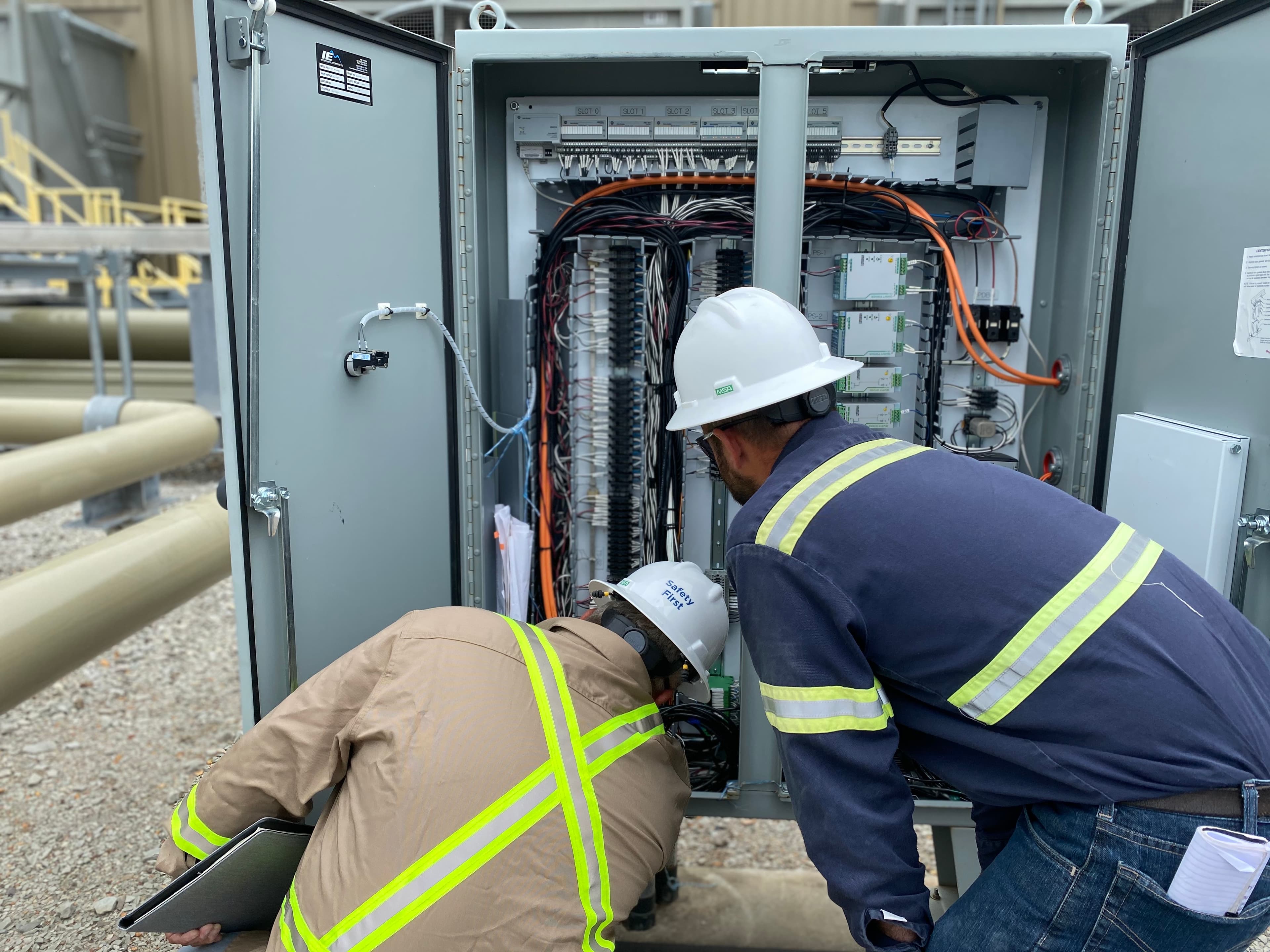
Midstream O&M is the ongoing work of keeping gathering systems, compressor stations, meter runs, and tank batteries running safely and in compliance. It combines routine preventive maintenance, emergency and unplanned repairs, asset integrity and inspection programs, and the regulatory documentation that proves the work was done. For Marcellus and Utica operators, it is the difference between steady throughput and a curtailed system.
This guide breaks down scope, service delivery models, real costs, and the winter conditions unique to the Appalachian Basin. It is written for operators deciding how to staff and structure their O&M program.
What Does Midstream O&M Actually Cover?
Midstream O&M covers four distinct buckets of work: preventive maintenance, emergency and unplanned repairs, integrity and inspection programs, and compliance recordkeeping. Together they keep gathering lines, compressor packages, regulation equipment, and tank batteries operating within safe and legal limits.
Preventive maintenance is the scheduled work: oil changes on compressor packages, valve exercising, instrument calibration, cathodic protection surveys. Emergency repairs are the unplanned events: a compressor trip at 3am, a gas leak on a meter run, a control fault that shuts in production. Integrity programs track corrosion, wall loss, and coating condition over time. Compliance recordkeeping documents all of it.
Routine maintenance versus capital projects. O&M keeps existing assets running. It does not cover new station construction or full equipment replacement. Those are capital projects with their own budgets and engineering scope. The line matters because contracts priced as O&M should not quietly absorb capital-scale work.
Emergency response and integrity management. Unplanned failures and long-term asset degradation are two sides of the same coin. Good integrity data reduces emergencies. A vibration trend on a compressor or a rising corrosion rate on a gathering segment gives crews warning before a failure shuts the system in.
What contractors handle versus what operators retain. Under contract operations, contractors execute maintenance, run inspections, and maintain records. Operators retain legal compliance ownership, permitting authority, and major capital decisions. Execution can be outsourced. Regulatory accountability cannot.
Which Service Delivery Model Fits Your Facilities?
The right model depends on your facility footprint. High-throughput compressor stations need dedicated onsite crews. Distributed meter and gathering assets are better served by circuit-rider coverage. Many operators run a hybrid across mixed asset types.
Dedicated onsite personnel fit stations that demand constant attention. Think a large compressor facility running multiple units around the clock. A single operator or a small crew stays on site, handling rounds, minor repairs, and first response. The cost is a fixed headcount you pay whether the station is busy or idle.
Circuit-rider and hybrid coverage spreads one technician across a route of meter sites, small gathering points, and remote regulation stations. A circuit rider might cover 15 to 30 sites depending on spacing and complexity, running scheduled rounds and responding to alarms. The cost is shared across facilities, which lowers the per-site rate.
On-call and callout-only arrangements carry no fixed field presence. You pay when you call. This works for low-risk assets or as backup coverage, but response times are longer because a technician has to travel from base.
| Model | Best-fit facility | Coverage pattern | Cost basis |
|---|---|---|---|
| Dedicated onsite | High-throughput compressor stations | Continuous or shift-based | Fixed headcount |
| Circuit-rider | Distributed meter and gathering sites | Scheduled rounds plus alarm response | Shared per-site |
| Hybrid | Mixed portfolios across Marcellus and Utica | Onsite at hubs, circuit for the rest | Blended |
| Callout-only | Low-risk or backup assets | On-demand | Variable per call |
What Goes Into a Preventive Maintenance Program?
A preventive maintenance program ties inspection frequencies to manufacturer specifications and regulatory intervals, not to guesswork. Each equipment class carries its own schedule and its own failure modes.
Compressor stations and rotating equipment. Reciprocating compressor maintenance follows API 618 design intent and API 670 for machinery protection. Crews run periodic oil analysis, vibration monitoring, and valve and rod-packing inspection. Rod packing and valve failures are among the most common causes of compressor downtime, and catching them on schedule avoids an unplanned shutdown.
Meter runs, regulation equipment, and storage tanks. Meters need calibration and proving to keep custody transfer accurate. Regulation equipment and instrumentation get ISA-aligned control checks. Storage tanks and gathering components require corrosion monitoring, AMPP-aligned cathodic protection surveys, valve exercising, and pressure testing on set intervals. The American Petroleum Institute (API) and AMPP (AMPP) publish the recommended practices these programs follow.
Predictive versus preventive approaches. Preventive maintenance runs on a calendar. Predictive maintenance runs on data. By trending vibration, temperature, and oil condition, crews catch a bearing or valve problem weeks before failure. Predictive programs reduce both emergency callouts and the cost of over-maintaining healthy equipment.
preventive maintenance checklist for midstream facilities
How Fast Should Emergency Response Be?
Emergency response time should be written into the contract as a firm commitment, not assumed. A common target is a two to four hour on-site response for critical assets, with 24/7 after-hours coverage. The 3am compressor trip is the scenario every commitment has to survive.
Real response time is driven by three things. Technician proximity. On-call rotation depth. And parts availability. A crew based in Houston, Pennsylvania reaches most Marcellus and Utica sites faster than a national provider dispatching from out of state. Distance is measurable, and it shows up on the worst nights.
Common emergencies include compressor trips, gas leaks, control system faults, and weather damage to exposed equipment. Each one can shut in a gathering system.
A curtailed gathering system can cost more per day in lost throughput than the entire annual O&M contract.
That math is why parts inventory strategy matters. Staging critical spares near the field, rod packing, valves, common instrumentation, and backup equipment, shortens repair windows from days to hours. Waiting on a part from a distant warehouse is often the single longest line item in downtime.
How Do Contractors Handle Regulatory Compliance?
Contractors execute compliance work and maintain the records, while the operator keeps legal responsibility. That division has to be stated plainly in every contract, because regulators hold the operator accountable regardless of who did the fieldwork.
Pennsylvania DEP and West Virginia DEP reporting. Pennsylvania Title 25 Chapter 78 and 78a set requirements for oil and gas operations, and crews handle the inspections and documentation those rules demand. Operators crossing into West Virginia face a second reporting regime. The Pennsylvania Department of Environmental Protection (PA DEP) publishes the state framework.
EPA LDAR and methane rules. Leak detection and repair programs under 40 CFR Part 60 fall to field crews who run optical gas imaging surveys, tag leaks, repair them, and log every step. The Environmental Protection Agency (EPA) sets the emissions standards these surveys satisfy.
DOT Part 192 and PHMSA documentation. Pipeline assets fall under 49 CFR Part 192, and PHMSA (PHMSA) requires detailed recordkeeping on integrity, testing, and repairs. Contractors maintain these logs so the operator can produce them on demand during an audit or incident review.
midstream regulatory compliance services
What Changes for Winter Operations in the Appalachian Basin?
Appalachian winters and terrain create failure modes national providers routinely underestimate. Freeze protection, glycol system management, and hillside site access become the deciding factors in whether a facility stays online through a hard freeze.
Freeze protection and glycol systems. Instrumentation and impulse lines freeze first, and a frozen impulse line takes a meter or a shutdown system offline. Glycol dehydration systems need proper concentration and circulation to keep gas moving. Crews check and top off freeze protection before temperatures drop.
Heat trace maintenance and winterization. Heat trace on exposed lines and instruments has to be inspected and repaired before it is needed, not after it fails. Winterization checklists should be executed in Q3 and Q4, well ahead of the first hard freeze, so gaps get fixed while conditions still allow it.
The polar vortex events of recent winters exposed how widespread instrument freeze-offs can curtail an entire basin at once. Facilities with disciplined freeze protection stayed up. Those without it went dark.
Site access on hilly terrain during snow and ice. Steep Pennsylvania and West Virginia lease roads turn dangerous under snow and ice. Snow removal, road maintenance, and safe access planning are part of winter O&M, because a technician who cannot reach a site cannot fix it.
Why Appalachian Basin Operators Choose ShalePro
Location, capability, and field experience combine into faster, more capable coverage than a national provider can offer in this basin. A Houston, Pennsylvania base puts crews near Marcellus and Utica assets, which shows up directly in emergency response times.
ShalePro Energy Services is an oil and gas field services company serving the Appalachian Basin from Houston, Pennsylvania, specializing in mechanical construction, pipe fabrication, helical pile installation, and midstream operations and maintenance.
That mechanical construction background matters for O&M. A crew that understands how a facility was built understands how to maintain it for the long term. mechanical construction services
In-house pipe fabrication supports custom repairs and modifications without waiting on an outside shop, which shortens repair windows on aging systems. pipe fabrication capabilities
Helical pile expertise addresses settling equipment pads and foundation work during equipment replacement, a common problem on older stations. helical pile installation
The close is a safety record, client tenure, and a straightforward path to a scope conversation. Ready to review your O&M program? Request a consultation or RFQ.
Frequently Asked Questions
How much does midstream O&M cost per facility?
Costs vary by facility type, coverage model, and asset age. Compressor stations run higher than meter sites because rotating equipment demands more attention. Compare a contractor's fully loaded rate against internal costs including benefits, overtime, training, and turnover, not just base wages. The gap is usually wider than operators expect.
Is outsourced O&M cheaper than an internal maintenance team?
It often is for distributed or seasonal assets, because contractors spread technicians across clients and avoid idle payroll. Internal teams can win at large single-site operations with constant workload. The right choice depends on facility count, utilization rate, and whether you need 24/7 coverage across a wide geographic footprint.
How long does it take to transition O&M to a contractor?
Most transitions run 30 to 90 days. It starts with a site assessment, knowledge transfer from outgoing staff, and procedure documentation, followed by a phased handoff. Many operators pilot one site before converting an entire portfolio to a term contract, which reduces risk and builds confidence in the vendor.
What certifications should midstream O&M technicians have?
Look for OSHA 10 or 30, confined space entry, H2S awareness, and lockout/tagout training. Contractors should be verified through ISNetworld and PEC SafeLandUSA. Ask about ongoing training programs and incident rates versus industry benchmarks before prequalifying any vendor. Verified safety data separates credible contractors from the rest.
Who is legally responsible for compliance when O&M is outsourced?
The operator retains legal responsibility for regulatory compliance and permits. The contractor executes the work and maintains inspection records, testing logs, and reporting. Contracts should clearly define which party performs each task and who signs regulatory filings. Regulators hold the operator accountable regardless of who did the fieldwork.
How do O&M contractors handle aging midstream infrastructure?
They manage legacy compressor packages and obsolete parts by sourcing alternatives, fabricating replacements, and planning upgrades during maintenance windows. A good contractor advises on repair-versus-replace decisions and addresses corrosion and settling foundations before they cause unplanned downtime. Fabrication capability in-house shortens the wait on custom parts.
Sources
Oil and Gas Maintenance Management: Upstream, Midstream, and Downstream
Midstream Oil and Gas: Improving Supply Chain Resilience
Midstream Oil & Gas Industry. Swagelok
Midstream Operations & Maintenance Driving the Future of Energy Infrastructure. Percheron LLC
Midstream Operational Benchmarking. Solomon
Midstream Oil & Gas Industry Overview. Umbrex
Cost Management and Optimization for Midstream Companies. Trindent
Mastering Midstream Oil and Gas Operations. Number Analytics