
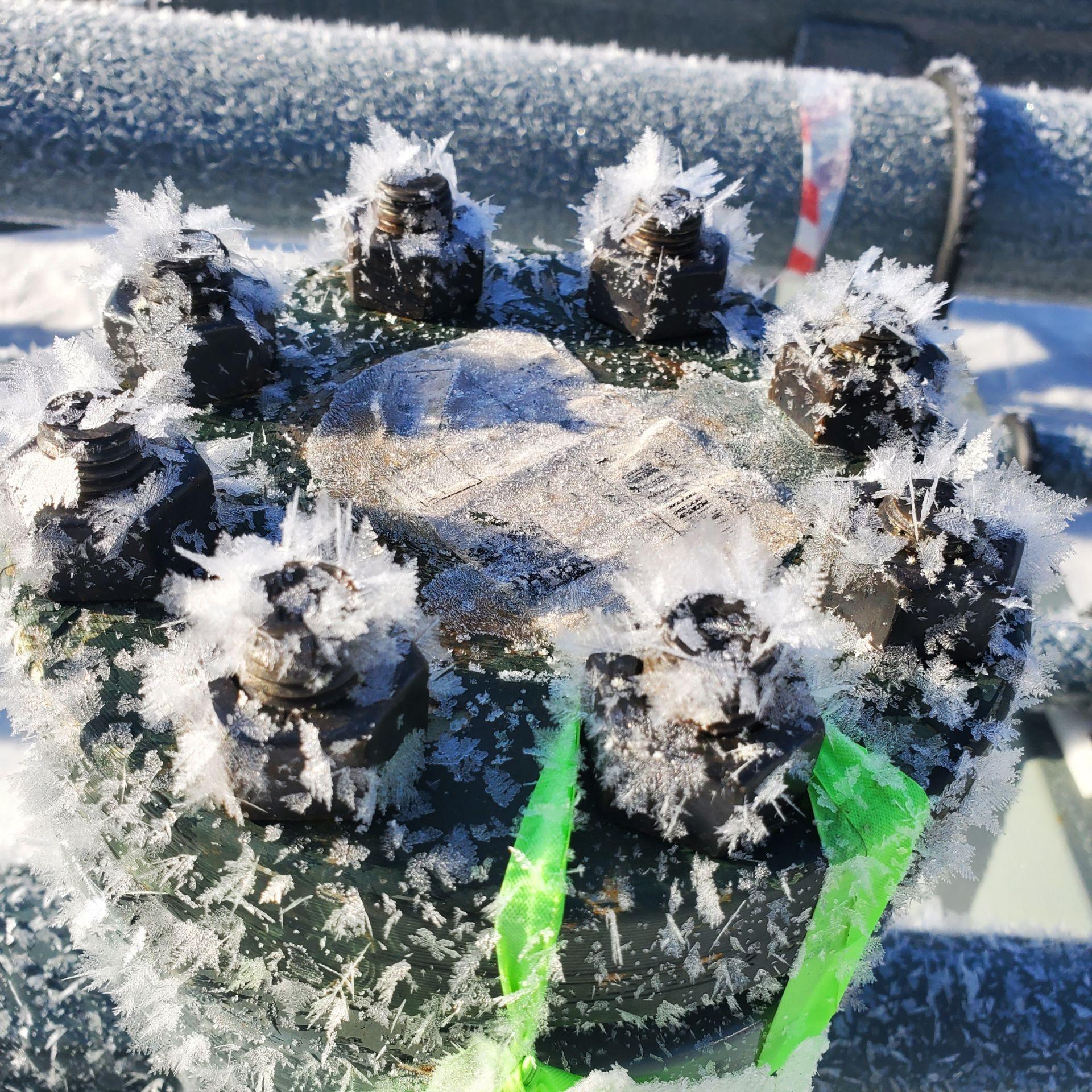
Proper lubrication is the single cheapest way to prevent bearing failure, which drives most unplanned compressor and pump downtime on a wellsite. A grease gun and five minutes beats an emergency callout and a replaced bearing every time. Match the grease to the equipment, grease on operating hours rather than the calendar, clean the fitting before the gun touches it, and watch for the purge.
That is greasing and lubrication fundamentals for wellsite equipment in one paragraph. The rest of this guide fills in the detail that keeps field assets running.
Why does proper lubrication matter for wellsite equipment?
Lubrication is the thin film that stands between a running bearing and a field-wide shutdown. When it fails, metal grinds on metal, heat spikes, and the damage cascades into lost production and capital replacement.
A grease film does three jobs at once. It reduces friction and the heat friction creates. It keeps dust, water, and grit out of the load zone. And it carries wear particles away from the surfaces that carry the load.
The cost of a lubrication failure in the field
A seized bearing on a compressor rarely stays a bearing problem. It can take out the rod, the packing, and the crankcase, turning a five-minute grease job into a multi-day outage and a four-figure parts bill.
Unplanned downtime also means an emergency crew dispatched to a remote site, often in bad weather. The economics favor the grease gun by a wide margin.
What lubrication actually protects
This guide covers the full wellsite and midstream equipment mix: wellhead valves, reciprocating and screw compressors, engines, pumps, pipeline valve actuators, electric motors, and fabricated skids.
The Appalachian Basin frames every decision here. Temperatures swing from freezing winter mornings to hot summer afternoons. Sites are dusty, muddy, and remote, and assets are spread across hundreds of miles, each one needing attention on its own schedule.
ShalePro operates and maintains more than 2,000 wells and hundreds of compressors across the Appalachian Basin with 24/7 emergency response. Systematic lubrication is what keeps those emergency calls from piling up.
How do you select the right grease for oil and gas equipment?
Select grease by matching three things: the NLGI consistency grade to the fitting and season, the base oil to the temperature range, and the thickener to the application and to whatever grease is already in the equipment. Manufacturer specification is the baseline, and understanding why that spec exists lets you adapt when field conditions demand it.
NLGI grades and pumpability
National Lubricating Grease Institute consistency grades run from soft to stiff. Lower grades pump better in cold weather. Higher grades stay in place under heavy load and high speed.
An NLGI 1 grease moves through a frozen fitting that an NLGI 2 will fight. But the softer product may migrate out of a hot, fast bearing. Match the grade to the fitting, the pump, and the season.
Petroleum versus synthetic base oils
Petroleum base oils cost less and handle routine service fine. Synthetics hold up in temperature extremes and stretch intervals, which earns their keep on hard-running compressors that never stop.
On a Marcellus compressor running nearly continuously, a synthetic that extends the interval and resists oxidation pays for itself in fewer trips and fewer failures.
Thickener types and compatibility
The thickener carries the base oil and defines how the grease behaves. The common choices:
Lithium complex: the general-purpose workhorse for most wellsite service.
Calcium sulfonate: handles water washout and high loads well.
Polyurea: suited to sealed electric motor bearings.
Mixing incompatible thickeners can turn grease into a useless soup that drops out of the bearing. API Standard 614 addresses lubrication and oil-control systems for rotating equipment (API). Confirm compatibility before switching products, every time.
ShalePro operations span New York to Tennessee, so lubricants have to perform across the full temperature range of the Appalachian Basin. Single-source accountability means one team specs products consistently across every site.
How often should wellsite equipment be greased?
Grease intervals should track operating hours and conditions, not a fixed calendar date. A compressor running nearly continuously needs far more frequent service than intermittent conventional wellhead equipment that cycles and sits.
Start from the manufacturer baseline, then shorten the interval for what the field actually throws at the equipment.
Adjustment factors that shorten intervals:
High load and high speed Elevated operating temperature Dusty or muddy contamination exposure Seasonal extremes, both winter cold and summer heat
High-volume Marcellus and Utica sites run compressors hard and continuously. Conventional wells cycle and sit idle for long stretches. The same calendar schedule cannot serve both, and forcing one on everything either over-services the quiet wells or starves the busy compressors.
Coordinate lubrication with other scheduled maintenance to cut the number of trips to remote sites. And review intervals when the weather turns in either direction.
Managing conventional wells through high-volume Marcellus and Utica assets means ShalePro crews adjust intervals for radically different duty cycles instead of forcing one schedule on everything.
What is the correct greasing technique?
Correct technique is a sequence: clean the fitting, control the pressure, apply the manufacturer quantity, and confirm fresh grease purges at the relief. Each step prevents a specific failure mode.
- Wipe the Zerk fitting clean before the gun ever touches it. A dirty fitting injects grit straight into the bearing.
- Use the right gun and control pressure. Manual and pneumatic guns both exceed what some seals tolerate.
- Apply the manufacturer quantity, no more.
- Watch for fresh grease purging at the relief, which confirms old grease has moved through.
- Wipe down and move on.
Why over-greasing damages as much as under-greasing
Over-greasing blows seals, overheats bearings by churning excess grease, and leaves a buildup that attracts dirt. Under-greasing starves the bearing and accelerates wear.
Knowing when to stop is a trained skill, not a guess. The purge is the signal. Once fresh grease appears, the job is done.
Cold-weather greasing in Appalachian winters
Cold weather needs its own approach. Pre-warm stiff grease and the gun so product actually flows, and select a low-temperature grease rated for the coldest expected start.
Plan for access, too. Frozen fittings, iced platforms, and short daylight all slow the work and raise the hazard.
ShalePro mechanical technicians are trained and cross-trained tradespeople, and locations like the Northeast PA shop in Thompson operate straight through Appalachian winters. Technique reflects that training investment.
Where are the common lubrication points on wellsite and midstream equipment?
Lubrication points cluster around bearings, stems, gears, and packing across every major asset type. Here is where to look on the equipment a field crew touches daily.
| Equipment | Primary lubrication points | Notes |
|---|---|---|
| Reciprocating compressor | Crosshead bearings, rod packing, crankcase, cooler fan motor | Rod packing greasing is often continuous via a lubricator |
| Engine | Valve train, accessory drives, turbocharger | Turbocharger takes oil, not grease |
| Pump | Bearing housings, packing glands, motor bearings | Each point has its own interval and spec |
| Wellhead | Valve stems, actuator gears, stuffing boxes | Gate valve lubricants follow API guidance |
| Pipeline valve | Actuator gears, ball or gate valve stems, linkages | Access often means confined or elevated work |
| Motors and gearboxes | Bearing housings, gear couplings, reducer fill points | Polyurea grease common in sealed motors |
Factor in the access realities. Confined spaces, elevated platforms, and winter ice change how long a point takes and how dangerous it is to reach.
ShalePro's O&M service lines cover compressor operations, pipeline and pigging services, and well tending, so this equipment mix reflects assets the crews maintain every day. compressor operations and maintenance services
What safety protocols apply to lubrication work?
Lubrication safety centers on one serious hazard and several routine ones. A grease gun generates high pressure and can inject grease through skin, which is a surgical emergency, not a bruise.
Never place a hand or finger over a fitting while the gun is under pressure. If grease breaks the skin, treat it as a medical emergency and get to care within hours, even when the entry wound looks minor.
The routine protocols still matter every job:
Wear gloves and eye protection.
Clean spills promptly to kill slip hazards.
Contain and dispose of used grease per environmental rules, consistent with Pennsylvania DEP and EPA requirements (EPA).
Lock out and tag out equipment with rotating or moving parts before greasing nearby.
Watch for hot surfaces, steam, and pressurized fluids.
OSHA's oil and gas extraction standards address these hazards directly (OSHA). Fold lubrication hazards into the daily tailgate meeting and the Job Safety Analysis so the whole crew knows the risks before anyone picks up a gun.
ShalePro runs a leading-indicator safety program backed by a dedicated field safety team that logs more than 500 safety observations every quarter, with Daily Tailgate meetings and a thorough Job Safety Analysis on every job. field safety program
How do you track lubrication and catch failures early?
Track lubrication with a maintenance log, paper or digital, that records every point, interval, and product used. That audit trail catches missed intervals before a bearing fails, and missed points cause most lubrication failures in the field.
Documentation does more than prevent misses. It serves compliance, supports warranty claims, feeds client reporting, and lets a crew refine intervals based on how equipment actually performs rather than guessing.
Early warning signs to catch before a point becomes a failure:
Bearings running hot above their normal temperature range Dry-bearing noise, grinding, or squeal Abnormal vibration at a bearing or housing
Infrared thermography and oil analysis add depth on critical equipment. And a crew has to know when a sign means run to the next scheduled maintenance versus shut down now. Some readings mean stop immediately.
Tracking lubrication across more than 2,000 wells and hundreds of compressors demands systematic documentation. ShalePro Energy Services is an oil and gas field services company serving the Appalachian Basin from Houston, Pennsylvania, specializing in mechanical construction, pipe fabrication, helical pile installation, and midstream operations and maintenance. Its 24/7 emergency response exists for the times early detection still needs a fast field crew. 24/7 emergency response
Frequently asked questions
Can you mix two different types of grease in the same fitting?
Generally no. Incompatible thickeners, such as lithium complex and polyurea, can break down into a soft, ineffective mess that fails to protect the bearing. Purge the old grease fully before switching products, and confirm compatibility with the supplier first. When in doubt, keep one product per point across the asset.
What grease works best for compressor rod packing in cold weather?
Use a low-temperature grease with a base oil rated for the coldest expected start, and a consistency grade that still pumps when stiff. Pre-warming the grease and the gun improves flow. Always follow the compressor manufacturer specification as the baseline before deviating for field temperature conditions.
How dangerous is a grease gun pressure injection injury?
Very dangerous. Grease guns reach high pressure and can force grease through skin, causing a serious injury that often needs surgery within hours. Treat any suspected injection as a medical emergency, even if the entry wound looks minor. Do not wait for pain or swelling to worsen before seeking care.
How do you know if you have over-greased a bearing?
Watch for excess grease purging past seals, a rise in bearing temperature, and grease buildup attracting dirt around the housing. Blown seals and overheating are common results. Apply the manufacturer quantity and stop once fresh grease appears at the relief rather than pumping until resistance builds.
Should lubrication intervals change between winter and summer?
Often yes. Cold stiffens grease and slows flow, while heat thins base oils and speeds oxidation. Review intervals and product selection seasonally, and confirm that the grease you run performs across your full temperature range before the weather turns. The Appalachian Basin swing from freezing to hot weather makes this a real concern.
Keep equipment running
Lubrication is the cheapest reliability work on any wellsite, and it only pays off when it is done consistently, documented, and matched to the duty cycle. The crews who get it right spend fewer nights chasing failed bearings in the cold.
For operations and maintenance built around that discipline across the Appalachian Basin, talk to ShalePro's O&M team(https://www.shalepro.com/contact).
Sources
API Std 614. Lubrication, Shaft-sealing and Oil-control Systems and Auxiliaries
API. STD 614. Lubrication, Shaft-sealing, and Oil-control Systems and Auxiliaries