Pipeline cleaning services cover mechanical pigging, debris and paraffin removal, launcher and receiver setup, system isolation and repressurization, and post-cleaning verification. These programs clear the buildup that chokes throughput and prepares a line for inline inspection. ShalePro delivers them as part of its Pipeline and Pigging service line across the Appalachian Basin.
Operators generally reach for a cleaning contractor at two moments: before commissioning a new line, and after contamination or throughput loss on a line already in service. Both need the same core capability. This guide walks through scope, regional coverage, and how cleaning fits a long-term operations program.
What Do Pipeline Cleaning Services Include?
Pipeline cleaning services include mechanical pigging, deposit removal, launcher and receiver work, pressure management, and verification that the line is clear. Everything else is a variation on those steps.
Core scope of a cleaning program
A cleaning program covers the operational pieces an operations manager can lift straight into an RFP:
- System isolation and valve lineup to segregate the section being cleaned.
- Launcher and receiver setup or installation, sized to the line diameter and pig type.
- Progressive pigging, starting with softer or gauge pigs and stepping up to brush or scraper pigs as debris clears.
- Debris, paraffin, and scale removal, with capture and disposal of returns.
- Depressurization and repressurization to bring the section down for work and back into service.
- Post-cleaning verification, often a clean gauge pig run, to confirm the line is ready.
Cleaning before inline inspection
Cleaning before inline inspection clears the debris that would otherwise corrupt integrity data. A smart pig reads wall thickness, dents, and corrosion, but paraffin and scale sitting on the pipe wall can mask defects or damage the tool. Clean the line first, and the data comes back usable on the first pass.
Pre-inspection cleaning is standard practice on commissioning projects and integrity re-runs alike. Pipeline pre-commissioning routinely bundles cleaning, gauging, and drying before a line ever carries product (Baker Hughes).
One accountable team, not a stack of subcontractors
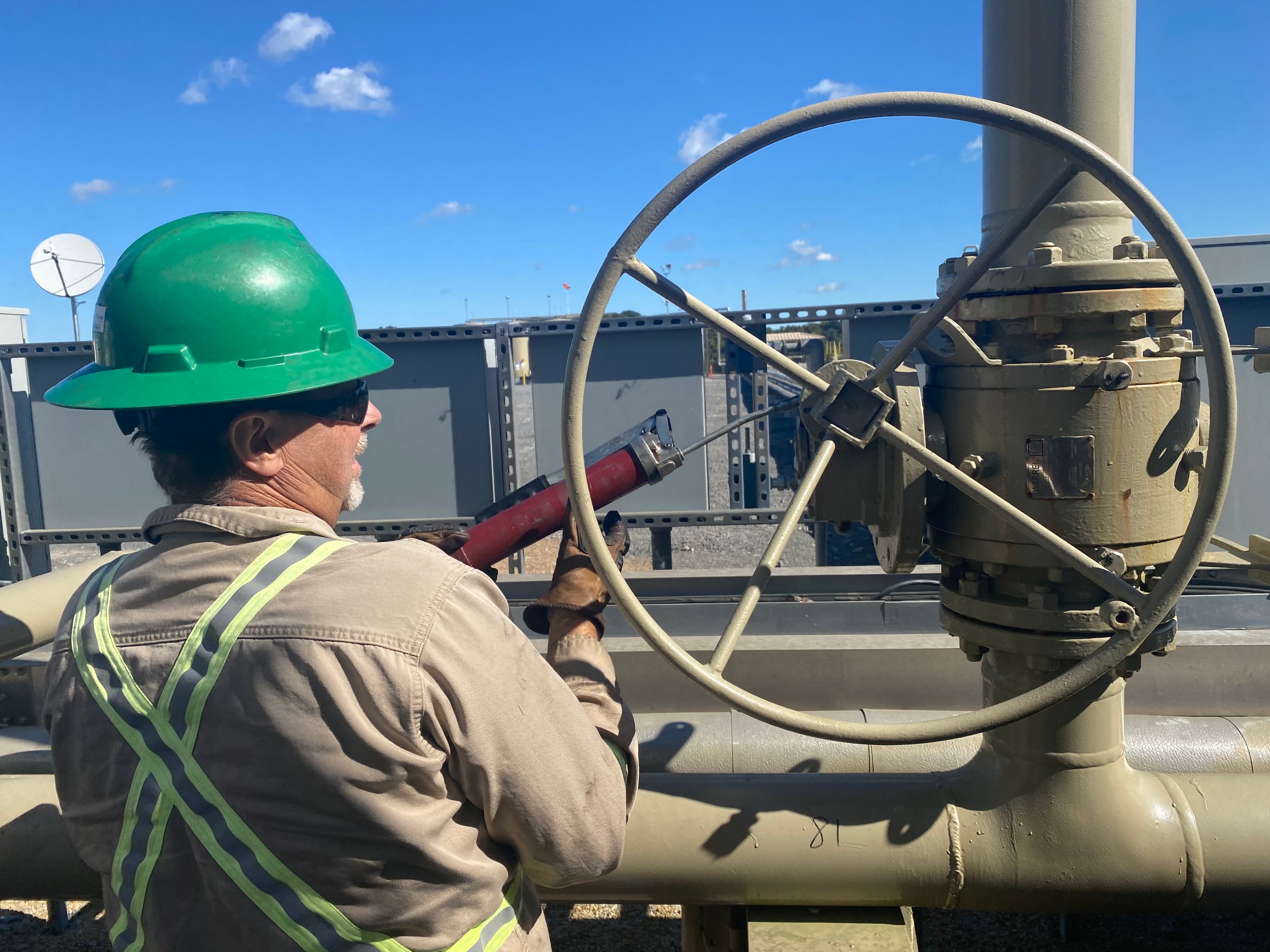
ShalePro performs pipeline cleaning in-house rather than farming out pieces to separate vendors. One crew handles setup, the pig runs, pressure management, and restart. The operator works with a single accountable team from site preparation through long-term maintenance, which cuts the coordination overhead that comes with stacking subcontractors on a live gathering system.
Pipeline Cleaning for Marcellus and Utica Midstream Systems
Marcellus and Utica gathering systems accumulate paraffin, scale, and condensate that shrink throughput, and the Basin's terrain and winter weather narrow the window for field work. Cleaning in this region is as much about access and scheduling as it is about the pig itself.
Paraffin and condensate in rich gas gathering lines
Rich gas lines drop out heavier hydrocarbons as pressure and temperature change along the run. Paraffin and condensate collect at low points and along the pipe wall, restricting flow and raising back pressure at the compressor. Left alone, that buildup pulls throughput down until the numbers force a cleaning run.
The right pig program addresses the deposit type. Softer foam or spheres handle liquids, brush and scraper pigs bite into hardened paraffin and scale. Pig returns then tell the operator how bad the buildup was and how soon to run again.
Terrain and winter access across the Basin
Appalachian topography puts gathering lines across ridges, hollows, and stream crossings that are hard to reach in the best weather and worse once snow and mud arrive. Field crews plan mobilization around access, staging equipment where it can actually reach a launcher or receiver in January.
Cleaning in the Basin is a scheduling problem as much as a mechanical one. The crew that knows the terrain gets the work done in the window that exists.
Field knowledge from managing real infrastructure
ShalePro manages more than 2,000 wells, conventional through Marcellus and Utica, and operates hundreds of compressors and pipeline networks across the Basin. Cleaning integrates with systems the firm already runs, so crews arrive understanding how a given gathering configuration is built and how it behaves under flow. That operational familiarity shortens diagnosis when throughput drops.
What In-House Capabilities Support Pipeline Cleaning?
In-house mechanical construction, fabrication, and compressor operations support pipeline cleaning by keeping launcher work, custom tooling, and pressure management under one roof. The operator does not have to line up separate contractors for each piece.
Mechanical construction for launchers and receivers
Mechanical construction crews handle launcher and receiver installation and modification without pulling in an outside contractor. On older lines that were never built for regular pigging, adding a permanent trap is often step one before a cleaning schedule makes sense. Doing that in-house keeps the whole job on one timeline.
Fabrication for custom components and tooling
The West Alexander, PA fabrication shop and yard builds custom pig components and tooling when an off-the-shelf part will not fit the line. Odd diameters, unusual bends, and legacy fittings all show up on Appalachian systems. In-house fabrication means a workaround gets built and delivered instead of stalling on a supplier's lead time.
Compressor operations for depressurization and restart
Compressor operations manage depressurization and repressurization so cleaning and restart stay on one schedule. Bringing a section down and back up cleanly protects both the line and the equipment. Coordinating it with the same team running the compressors avoids the handoff gaps that stretch downtime. Well tending and O&M crews then slot cleaning into planned maintenance windows.
Regional Coverage Across the Appalachian Basin
ShalePro runs seven locations across Pennsylvania, West Virginia, Virginia, and Tennessee, positioning crews close to the systems they serve. Coverage across the Basin is what makes fast response realistic rather than a promise on paper.
Seven locations from New York to Tennessee
The footprint includes shops and yards in West Alexander, PA, Clarksburg, WV, and Thompson, PA, plus field offices in Clintwood, VA, St. Marys, PA, and Kingsport, TN. Corporate headquarters sits in Houston, PA, near Pittsburgh. The firm takes work across New York, Pennsylvania, Ohio, West Virginia, Virginia, Kentucky, and Tennessee, which covers the productive core of the Basin.
| Location | Type | Region |
|---|---|---|
| Houston, PA | Corporate HQ | Near Pittsburgh |
| West Alexander, PA | Shop and yard | Central |
| Clarksburg, WV | Shop and yard | South |
| Thompson, PA | Shop and yard | Northeast |
| Clintwood, VA | Field office | South |
| St. Marys, PA | Field office | Central |
| Kingsport, TN | Field office | South |
24/7 emergency response with crews in the field
ShalePro runs 24/7 emergency response with crews positioned across the field, so a flow restriction gets a fast mobilization instead of a long haul from a distant hub. When back pressure climbs or throughput drops, crews already familiar with the gathering system can respond quickly to diagnose and clear the line.
How Does ShalePro Handle Safety on Pipeline Cleaning?
ShalePro handles safety on pipeline cleaning through a leading-indicator program backed by a dedicated safety and training team that logs more than 500 field safety observations every quarter. The safety department owns that work. It does not get offloaded to the client.
Leading indicators and field observations
Crews hold Daily Tailgate meetings and complete a Job Safety Analysis on every job before work starts. Pigging carries real hazards, from stored pressure in a launcher to trap opening procedures, and those are exactly the tasks a JSA is built to control. The safety team runs observations, incident management, and compliance in the field rather than leaving it to the operator.
Federal pipeline safety rules sit under PHMSA, and workplace safety in oil and gas falls under OSHA. A cleaning contractor works inside both frameworks.
Certifications and compliance
Certifications include ISNetworld Certified, Veriforce Preferred, DOT Compliant, and OSHA Compliant, with Veriforce SafeLandUSA trained crews. Cooper Ferko leads the Safety Department. For operators who prequalify contractors through those platforms, the paperwork is already in place before the first pig ever loads.
Pipeline Cleaning as Part of Long-Term O&M
Pipeline cleaning works best as a recurring part of an integrity and O&M program, not a one-off scramble after throughput has already dropped. Scheduled runs during planned windows keep flow steady and give the operator return data to tune the interval.
Scheduled cleaning inside maintenance windows
Because ShalePro already operates pipelines and compressors for many clients, cleaning slots into existing maintenance rather than triggering a separate mobilization. That timing reduces cost and downtime, since the crew is already working the system on a known schedule. Frequency gets tied to gas composition, flow rate, and what the pig returns show.
ShalePro Energy Services is an energy and industrial services company serving the Appalachian Basin from Houston, Pennsylvania, specializing in mechanical construction, pipe fabrication, helical pile installation, and midstream operations and maintenance.
One provider from construction through maintenance
One provider handling site preparation through long-term maintenance cuts the coordination load across service lines. Brendan Burke, Vice President of Production at Seneca Resources Company, LLC, calls ShalePro "a trusted partner for over a decade, consistently delivering well tending and roustabout services." That kind of long-run relationship is what a cleaning schedule depends on.
To scope a cleaning program or fold it into an O&M plan, reach Matt Lowther, VP of Midstream and O&M Services, or Dottie Jones, Director of Sales, with more than 10 years of oil and gas experience. Start the conversation at ShalePro Pipeline and Pigging Services.
Frequently Asked Questions
How often should Appalachian gathering lines be cleaned?
Frequency depends on gas composition, flow rate, and paraffin or condensate buildup. Rich gas lines with heavy paraffin may need more frequent runs. Most operators set a schedule tied to their integrity management program, then adjust the interval based on throughput data and what pig returns reveal after each run.
Does pipeline cleaning require a full shutdown?
Not always. Some cleaning runs proceed under flow using launchers and receivers, while others need isolation and depressurization. ShalePro coordinates cleaning with compressor operations to manage system pressure and restart, keeping downtime aligned to planned maintenance windows wherever the line configuration and flow conditions allow.
Can a contractor clean a line before an inline inspection?
Yes. Cleaning ahead of an inline inspection or smart pig run clears debris and buildup so the tool captures accurate data. ShalePro performs this pre-inspection cleaning as part of its pipeline and pigging service line across Marcellus and Utica systems, protecting both the inspection tool and the integrity results.
What states does ShalePro serve for pipeline cleaning?
ShalePro takes work across New York, Pennsylvania, Ohio, West Virginia, Virginia, Kentucky, and Tennessee. Seven locations across Pennsylvania, West Virginia, Virginia, and Tennessee, plus crews positioned across the field, support rapid response throughout the Appalachian Basin from a footprint built for the region.
Who handles emergency pipeline cleaning when flow drops suddenly?
ShalePro runs 24/7 emergency response with crews positioned across the field rather than mobilizing from a distant hub. When a flow restriction appears, field crews already familiar with Basin gathering systems can respond quickly to diagnose the cause and clear the line before back pressure damages equipment.
Related Reading
Pipeline pigging basics for midstream operators
Compressor operations and maintenance in the Appalachian Basin
Mechanical construction services for midstream systems
Throughput does not come back on its own once paraffin and condensate take hold. If a line is losing flow or a new system needs cleaning before commissioning, put a Basin-based crew on it. Reach ShalePro at Contact ShalePro Energy Services.
Sources
Pipeline pre-commissioning and maintenance | Baker Hughes
PHMSA. Pipeline and Hazardous Materials Safety Administration