Meter station installation is the multi-trade work of building the measurement infrastructure that records natural gas volume for custody transfer, revenue accounting, and operational control. It spans civil site prep, foundations, fabrication, mechanical installation, piping tie-ins, and commissioning. Done right, it protects both regulatory standing and the money that changes hands on every cubic foot measured.
That last point drives everything. Measurement accuracy is where gas becomes dollars, so the quality of the install has direct financial consequences for every party on the pipe.
What Is Meter Station Installation?
Meter station installation is the construction of the facility that measures natural gas flow at a defined point on a pipeline system. It brings together civil, fabrication, mechanical, and pipeline trades to build a station that meters volume reliably and ships that data to accounting and control systems.
The work is not a single discipline. It is a sequence of trades handed off cleanly from site prep through startup.
The components that make up a meter station
A meter station is a package of coordinated equipment, not a single device. The core pieces include:
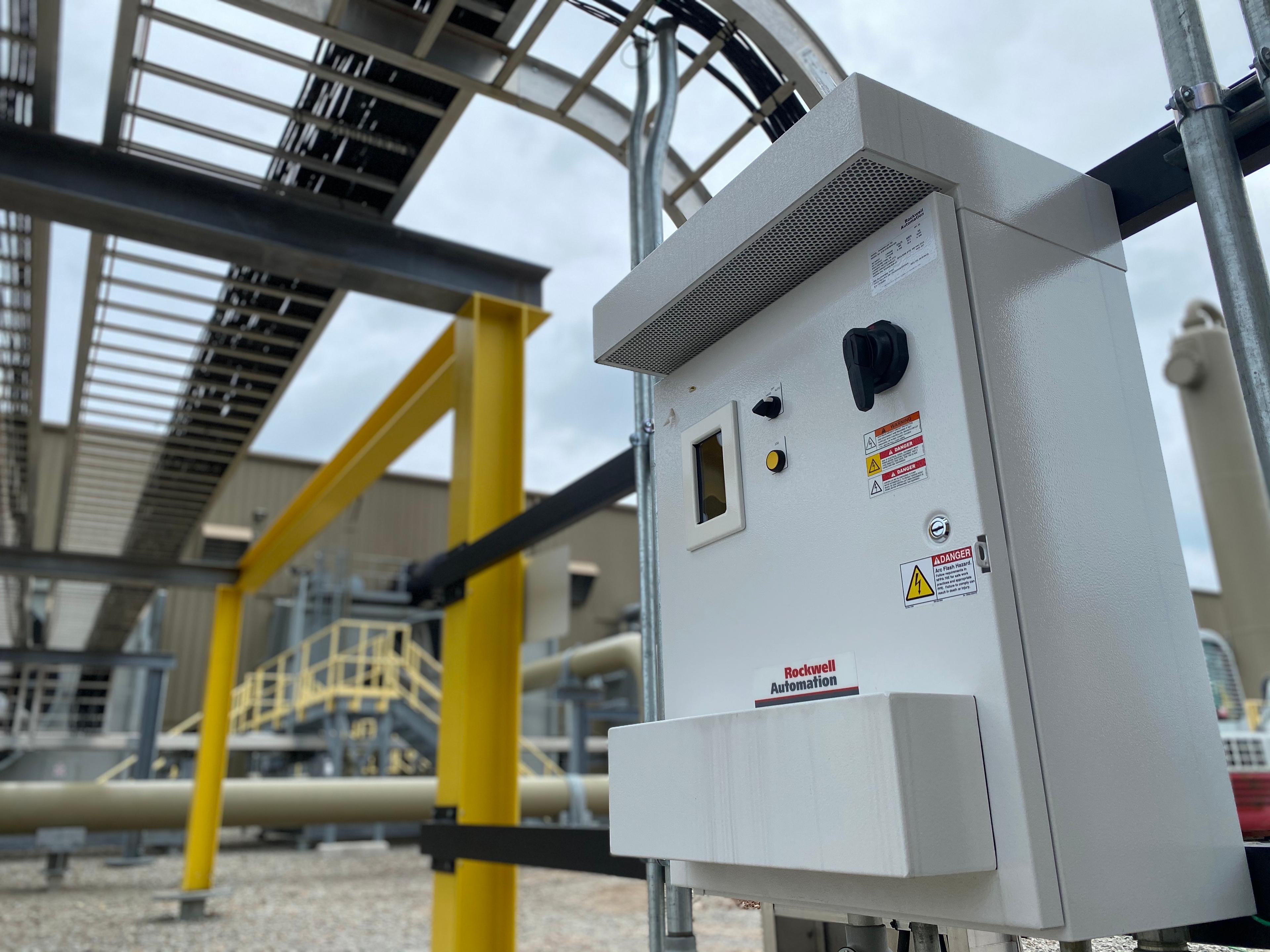
Meter runs, which are the straight, calibrated sections of pipe where flow is actually measured Flow computers that convert raw measurement into volume and energy data Regulators and control valves that manage pressure Isolation and relief valves, filtration, and the piping that connects it all Instrumentation taps and supporting structures, skids, and foundations
Every component affects measurement accuracy. A meter run installed out of spec, or a regulator sized wrong, shows up later as lost or disputed volume.
Where meter stations are used
Meter stations sit at every point where gas custody or control matters. That includes custody transfer points on gathering systems, wellhead and battery metering, transmission line measurement, and large-volume offtake at industrial plants and power generation facilities.
Demand for that last category keeps growing. Natural gas fuels a significant portion of U.S. electricity generation, and according to the U.S. Energy Information Administration (EIA), those plants need accurate inlet metering.
These applications map directly to the customer base across the Appalachian Basin: midstream operators, E&P companies, and industrial facility owners who all need defensible numbers at the fence line.
What is the full scope of a meter station installation project?
The full scope of a meter station installation runs through four stages: civil site preparation, shop fabrication, mechanical installation with pipeline tie-ins, and commissioning with handoff to operations. Each stage feeds the next, and the schedule lives or dies on how cleanly they connect.
Stage one: civil site preparation
Civil work comes first and sets the foundation for everything after. Crews handle grading, access roads, stormwater drainage, and the foundations the equipment sits on.
Soil conditions dictate the approach. On poor soil, sloped terrain, or sensitive sites, helical piles often replace poured footings. They install fast, carry load immediately, and disturb less ground. The Deep Foundations Institute (DFI) publishes practice guidance on helical pile design for exactly these conditions.
Stage two: fabrication and pre-assembly
Fabrication follows site prep, and much of it happens before the first truck reaches the field. Meter runs, piping assemblies, and skid-mounted equipment packages get built in the shop to code and tolerance.
Welding and fit-up done indoors beats field conditions every time. Work follows ASME B31.8 piping code and American Welding Society (AWS) standards, with inspection to back it up.
Stage three: mechanical installation and tie-ins
Mechanical crews set the fabricated assemblies, land the piping, and make the connections. Then the station ties into existing pipeline infrastructure, which is where coordination with operations becomes critical.
Most tie-ins touch live systems. Planning the window, the isolation, and the startup sequence is as much of the job as turning wrenches.
Stage four: commissioning and handoff
Commissioning closes the project with pressure testing, leak checks, and flow verification before measurement goes live. Documentation gets packaged, and the station turns over to operations.
The thread through every stage is one project manager, one accountable team, and one safety program. A contractor that performs civil construction, helical piles, fabrication, mechanical construction, and pipeline services in-house removes the gaps where schedules usually slip.
Why does shop fabrication speed up meter station installation?
Shop fabrication speeds up meter station installation because it moves welding, fitting, and assembly into a controlled environment where quality is tighter and weather never stops work. Assemblies arrive ready to set and tie in, which cuts field time and crew exposure.
The pre-assembly advantage
Off-site pre-assembly shrinks the work that has to happen on an active site. Less field welding means fewer variables, a smaller crew footprint, and shorter exposure in a live-gas environment.
Every weld moved indoors is a weld done under better light, better access, and better inspection conditions than any field trench offers.
Quality control is easier to enforce in the shop. Fit-up jigs, repeatable positioning, and controlled NDT per American Society for Nondestructive Testing (ASNT) practice all get harder in the field.
What gets built off-site
The high-value assemblies are the ones that get pre-built. That typically includes meter runs with their straight-run tolerances, piping manifolds, and complete skid-mounted equipment packages.
A dedicated fabrication shop and yard, like the facility in West Alexander, PA, lets crews build those assemblies in advance and deliver them for field setting. The field crew sets, aligns, and connects instead of building from scratch.
How do new meter stations tie into existing pipelines?
New meter stations tie into existing pipelines through hot taps, line stops, and planned tie-in windows that keep gas moving where possible and shorten any required shutdown. The goal is integration with minimal operational disruption.
Hot taps and line stops
Most meter station work connects to live infrastructure, so the connection method matters. A hot tap cuts into a pressurized line without taking it out of service, while a line stop isolates a section for work and then restores flow.
Both require careful planning with operations. Shutdown timing, bypass flow, and startup sequencing all get worked out before a crew ever opens a line.
Pigging and flow verification
Pigging and commissioning verify line condition and flow before measurement goes live. A clean, verified line is the precondition for trusting the first measured volume.
Tie-in work demands coordination between construction and operations to plan the shutdown and bring the station up safely. Mechanical and pipeline crews trained in both installation and tie-in work handle that handoff without a second contractor in the mix.
One scope note matters here. Instrumentation, controls, and electrical work is coordinated with the client or a subcontractor, not performed in-house. The construction team focuses on civil, fabrication, mechanical, piping, and tie-ins.
What are the compliance and safety requirements?
Meter station installation must meet federal pipeline safety rules under 49 CFR Part 192, enforced by the Pipeline and Hazardous Materials Safety Administration (PHMSA), along with state regulations in Pennsylvania, Ohio, West Virginia, and every other state where the work happens.
Regulatory requirements in the Appalachian Basin
Compliance stacks federal, state, and industry standards. On the technical side, AGA Report No. 3 and No. 7 govern orifice and turbine measurement, and ASME B31.8 (ASME) sets the gas transmission and distribution piping code.
State environmental rules add another layer. The Pennsylvania Department of Environmental Protection (PA DEP) regulates site disturbance and emissions, and the EPA (EPA Oil & Natural Gas) sets methane and air-quality requirements that touch station design.
Utility-side clearance rules also shape layout. Service and meter installation guides from distribution operators spell out minimum clearances from buildings, vents, and ignition sources (We Energies meter guidelines).
Leading-indicator safety on the job
Safety on a meter station job runs on leading indicators, not just the lagging ones you tally after something goes wrong. A strong program logs field safety observations continuously, with more than 500 observations every quarter feeding the system.
Crews hold Daily Tailgate meetings and complete a Job Safety Analysis before the work starts. OSHA (OSHA Oil & Gas Extraction) standards set the floor, and a dedicated field safety team runs observations and compliance rather than leaving it to the client.
Credentials back the culture. Look for ISNetworld Certified, Veriforce Preferred, DOT Compliant, OSHA Compliant, and SafeLandUSA trained crews.
How to choose a meter station installation contractor
Choose a meter station installation contractor that performs civil, fabrication, mechanical, and pipeline work in-house. One accountable team eliminates the coordination gaps and finger-pointing that happen when a project is split across separate specialty subs.
Questions to ask before you sign
Ask hard questions before the contract is signed. A short checklist separates serious contractors from the rest:
- Do you self-perform civil, fabrication, mechanical, and pipeline tie-in work, or subcontract parts of it?
- Which safety credentials do you hold: ISNetworld, Veriforce, DOT, OSHA, SafeLandUSA?
- What is your shop fabrication and pre-assembly capacity to cut field time?
- Do you know the regulatory landscape in my operating states?
- Can you support the station long-term after commissioning?
Why in-house capabilities matter
In-house capability is the difference between one schedule and four. Here is how the self-perform model compares to a split-trade approach on the measures that affect cost and risk.
| Factor | Single in-house team | Multiple subcontractors |
|---|---|---|
| Schedule coordination | One PM, one timeline | Multiple handoffs, gaps |
| Accountability | One team owns outcomes | Finger-pointing on defects |
| Safety program | One standard across trades | Varies by sub |
| Long-term support | Builder also maintains | Separate O&M vendor |
That last row matters more than it looks. A contractor that also provides operations and maintenance builds the station with maintainability and valve access in mind from day one.
ShalePro Energy Services is an energy and industrial services company serving the Appalachian Basin from Houston, Pennsylvania, specializing in mechanical construction, pipe fabrication, helical pile installation, and midstream operations and maintenance. The company serves the Basin with roughly 300 employees, 24/7 emergency response, and one accountable team from site prep through long-term maintenance.
As Sam of Expand Energy put it: "ShalePro has been a strong partner for our operations, consistently executing complex facility construction projects with a strong focus on quality, safety, and schedule."
See the full range of mechanical construction services and pipeline and pigging services that go into a meter station build.
Frequently Asked Questions
How long does a typical meter station installation take?
Timelines vary with site conditions, foundation needs, and tie-in complexity. Pre-fabricating meter runs and skids off-site shortens field work significantly, since assemblies arrive ready to set and connect. Civil prep and permitting often drive the longest lead times on a project, sometimes outlasting the mechanical work itself by weeks.
What site preparation is required before mechanical installation?
Civil work comes first: grading, access roads, stormwater drainage, and foundations. Poor soil, slopes, or sensitive areas may call for helical piles instead of poured footings because they carry load immediately and disturb less ground. Utility coordination and site layout are also settled before any equipment gets set.
Can one contractor handle civil, fabrication, mechanical, and pipeline work?
Yes. ShalePro performs civil construction, helical piles, fabrication, mechanical construction, and pipeline and pigging services in-house. A single project manager, one safety program, and one quality standard cover every trade, which removes the coordination gaps and defect disputes common between separate specialty contractors.
Does ShalePro perform instrumentation and electrical work on meter stations?
No. ShalePro coordinates with the client or a subcontractor for instrumentation, controls, and electrical scope. ShalePro focuses on civil prep, fabrication, mechanical installation, piping, and pipeline tie-ins, then supports the station through long-term operations and maintenance after commissioning is complete.
What happens after a meter station is installed and commissioned?
After pressure testing, leak checks, and flow verification, the station turns over to operations with full documentation. ShalePro provides long-term O&M, including pipeline and pigging services, so the same team that built the station can keep it running and maintained over its service life.
Which states does ShalePro install meter stations in?
ShalePro takes work in New York, Pennsylvania, Ohio, West Virginia, Virginia, Kentucky, and Tennessee, covering the Marcellus and Utica. Operations run from headquarters in Houston, PA, with fabrication shops and field offices positioned across the Appalachian Basin for fast response.
Ready to Build or Tie In a Meter Station?
Meter station installation rewards a team that owns every trade from the first grade stake to the final flow verification. One accountable crew keeps the schedule tight, the safety standard consistent, and the measurement defensible.
Talk to the team that builds, ties in, and maintains meter stations across the Appalachian Basin. Contact ShalePro Energy Services to start a project.
Sources
We Energies Meter Installation Guidelines
U.S. Energy Information Administration
EPA Oil & Natural Gas Operations