
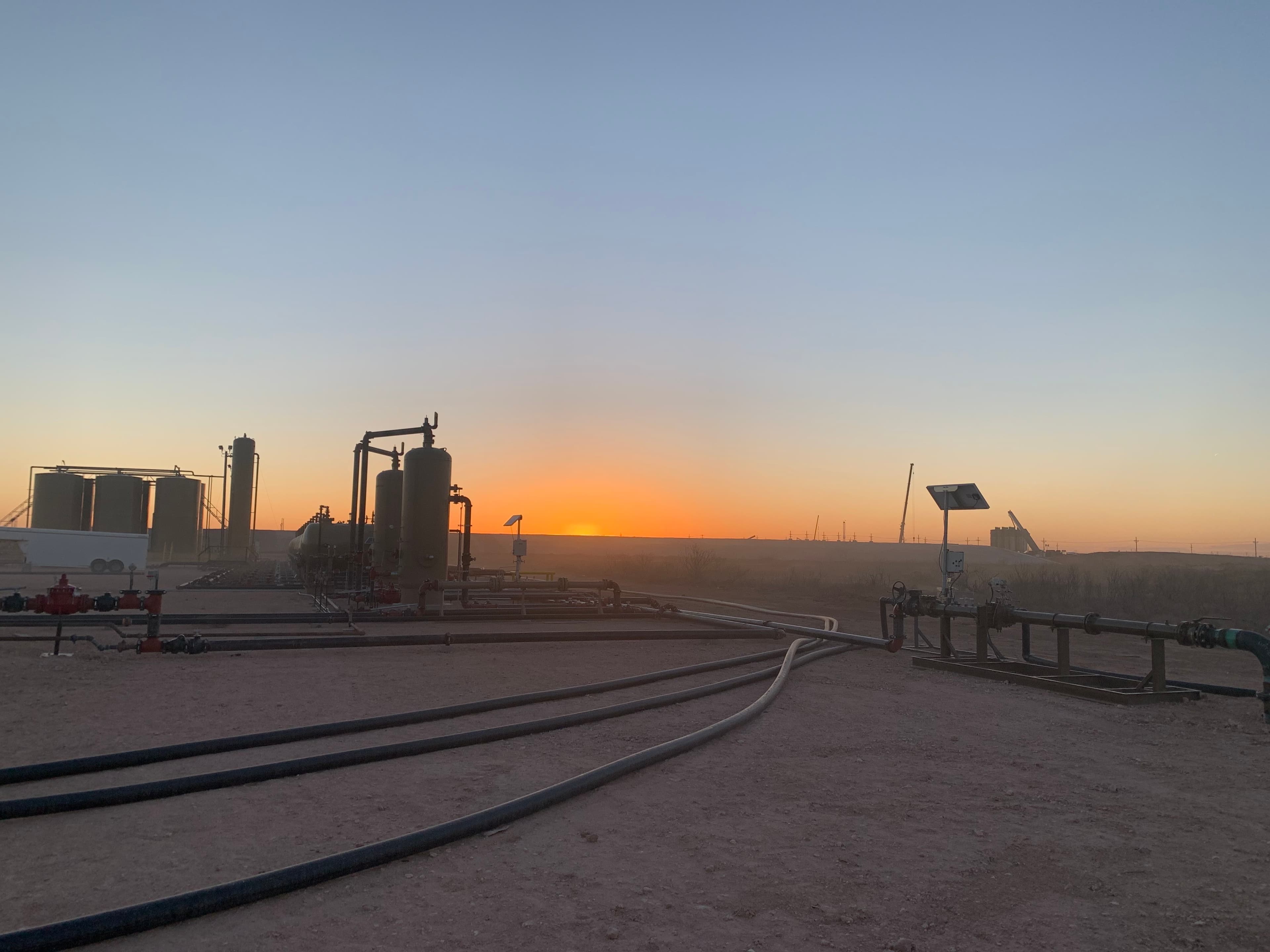
Helical piles in midstream are steel shafts with helical plates that get screwed into the ground to support compressor stations, meter runs, pig launchers, and pipeline structures, and they carry load the day they go in. No concrete curing. No dewatering. Equipment sets within days instead of weeks.
That speed is why midstream operators across the Appalachian Basin reach for them. Compressor skids, coolers, scrubbers, and pigging equipment all need stable, verified bearing, and helical piles deliver it without the schedule drag of a spread footing pour.
This guide is written for operators and engineers who already know the basics. It covers where helical piles fit in gas compression and metering, how they perform in Appalachian geology, the regulatory picture, and how the work gets delivered under one accountable team.
What Are Helical Piles Used For in Midstream Operations
Helical piles support the load-bearing infrastructure of a midstream facility: skid-mounted compressors, coolers, scrubbers, meter runs, regulators, control buildings, and elevated pipe racks. They function as deep foundation elements that transfer equipment loads to competent soil or bedrock through the bearing of helical plates.
The appeal for midstream is loading speed. A compressor skid or a meter station cannot sit on a foundation that is still curing. Helical piles eliminate that wait because installation torque correlates directly to load capacity (Hubbell CHANCE).
Compressor stations and skid-mounted equipment
Compressor stations demand foundations that resist both static and dynamic loads. Reciprocating and centrifugal units generate vibration, and the supporting foundation has to hold alignment over years of runtime.
Helical piles anchor skid bases, coolers, and scrubber vessels with verified capacity per pile. Because each pile is torque-monitored on the way in, the crew knows the bearing before the skid ever lands.
Meter stations, pig launchers, and pipeline supports
Meter stations, regulator sets, and pig launchers and receivers sit on helical piles for the same reason: fast, code-compliant support with minimal ground disturbance. Pipeline anchors and elevated pipe supports also use helical shafts to resist uplift and lateral thrust (Hubbell pipeline anchors).
ShalePro offers helical pile installation as part of its mechanical construction and civil construction services. The company also operates compressor stations and pipelines through its compressor operations and pipeline and pigging services, so the team understands the requirements of the facilities being built.
How Do Helical Piles Work in Appalachian Basin Geology
Helical piles work by advancing a steel shaft into the ground with a hydraulic drive head while torque is monitored, and that installation torque correlates to load capacity, giving verified bearing without a concrete pour. The Appalachian Basin throws hard conditions at foundation crews, and helical piles handle most of them.
Shallow bedrock and karst conditions
Where bedrock sits close to the surface, helical piles anchor into competent rock without the deep excavation or blasting a drilled pier would require. That saves days and avoids the cost of rock removal.
In karst and limestone geology, variable soil and voids create real risk for cast-in-place concrete, which can wash out. Helical piles advance through those zones to reach stable strata without that failure mode.
Steep slopes, wet soils, and mine subsidence
Wet soils and high water tables normally force dewatering before a concrete footing goes in. Helical piles install without dewatering, which removes pumping, extra erosion control, and discharge permit requirements.
On steep slopes and abandoned mine areas, the advantages stack up:
Smaller equipment fits hillside pads and narrow right-of-way where a ready-mix truck cannot go Piles can be designed for both tension and compression where differential settlement or subsidence is a concern Reduced grading limits the footprint on sensitive terrain
ShalePro operates across the Appalachian Basin from New York to Tennessee and manages more than 2,000 wells through Marcellus and Utica developments, where these ground conditions are common.
Installation Speed and Operational Benefits for Midstream Projects
Helical piles can be installed and loaded the same day, cutting the concrete curing period that can span weeks that spread footings and drilled piers require. For midstream schedules, that difference moves equipment setting up by weeks.
Consider how the two approaches compare on a typical station pad.
| Factor | Helical Piles | Concrete Footings / Drilled Piers |
|---|---|---|
| Load-ready | Same day | Concrete curing period that can span weeks |
| Dewatering in wet soil | Not required | Often required |
| Winter installation | Year-round | Restricted below freezing |
| Site disturbance | Small footprint | Grading, excavation, spoil |
| Capacity verification | Torque monitored per pile | Cure tests, later inspection |
Same-day loading versus concrete curing
Once piles are set and torque-verified, compressor skids, meter runs, and pigging equipment can be set immediately. There is no waiting for a slab to reach design strength before the crane arrives.
A smaller equipment footprint also means less clearing, grading, and erosion control. On pipeline right-of-way and environmentally sensitive sites, that reduced disturbance simplifies permitting and restoration.
Year-round installation and emergency repairs
Piles go in during winter and wet conditions when concrete work is restricted, so construction can proceed during off-peak production windows. That flexibility matters when a maintenance turnaround lands in the cold months.
Helical piles also serve emergency response. A failed foundation or a damaged pipe support can be stabilized or replaced without an extended facility shutdown. ShalePro provides 24/7 emergency response with crews positioned across the field, alongside mechanical construction and coordinated equipment setting.
Regulatory and Engineering Requirements for Midstream Foundations
Midstream foundations must satisfy federal pipeline safety rules, state environmental permits, and site-specific engineering before a single pile goes in. Helical piles meet those requirements when they are designed and documented correctly.
DOT pipeline safety and state permits
Foundations for compressor stations and pipeline facilities fall under federal structural integrity and corrosion protection requirements enforced by PHMSA under 49 CFR Parts 192 and 195. Interstate gas facilities also answer to FERC.
State agencies add their own layer. In Pennsylvania, the Department of Environmental Protection requires erosion and sediment control plans, stormwater permits, and structural certifications, and neighboring states run parallel programs.
Engineering design and installation verification
Helical piles must be designed by a licensed professional engineer using site-specific soil testing and the load requirements of the supported equipment. Design practice for helical and screw piles is documented by the Deep Foundations Institute.
Follow these steps to keep a midstream pile installation defensible:
- Complete a geotechnical investigation with borings at the pad location
- Have a licensed PE design shaft size, helix configuration, and target torque
- Monitor installation torque on every pile to confirm capacity
- Perform proof load testing where permit or design requires it
- Specify galvanized or epoxy-coated shafts in corrosive soils or near cathodic protection systems, per AMPP corrosion practice
ShalePro maintains DOT Compliant and OSHA Compliant certifications and works within the regulatory environment of Appalachian Basin state agencies. Worker safety on these sites follows OSHA oil and gas standards.
How ShalePro Delivers Integrated Helical Pile and Midstream Construction
ShalePro delivers helical pile installation, structural steel erection, equipment setting, pipe fabrication, and pipeline tie-ins under one schedule and one point of contact. That single-source model removes the handoffs that stall multi-contractor projects.
Single-source accountability from foundation to tie-in
Because ShalePro operates and maintains compressor stations and pipelines, the construction team knows the constraints of the facilities being built. A crew that runs these assets understands what a serviceable foundation actually needs.
Structural steel, skid bases, and pipe assemblies are fabricated at the West Alexander shop and yard and delivered coordinated with pile installation. That coordination keeps the crane, the skid, and the foundation on the same timeline.
Fabrication, safety, and long-term O&M
ShalePro Energy Services is an energy and industrial services company serving the Appalachian Basin from Houston, Pennsylvania, specializing in mechanical construction, pipe fabrication, helical pile installation, and midstream operations and maintenance.
The company can provide ongoing operations and maintenance after construction, so foundation work is designed for long-term serviceability rather than just the day of the pour. Fabrication follows AWS welding and ASME piping code standards.
A crew that operates the facility after it is built has every reason to build the foundation right the first time.
A leading-indicator safety program supports work on active midstream facilities, with Daily Tailgate meetings, Job Safety Analysis, and more than 500 field safety observations every quarter. That program is backed by ISNetworld, Veriforce, DOT, and OSHA credentials.
ShalePro performs helical pile installation, mechanical construction, fabrication at West Alexander, and operations and maintenance in-house, so a client works with one team from site preparation through long-term operation.
Frequently Asked Questions
Can helical piles be installed near an active compressor or pipeline?
Yes. Helical pile installation uses smaller equipment than drilled pier rigs or ready-mix trucks, so crews can work in congested laydown areas next to operating compressors and live pipelines. Limited access and reduced site disturbance make them well suited to brownfield expansions on active stations.
What load capacity can helical piles provide for a compressor skid?
Capacity depends on shaft size, helix configuration, soil conditions, and installation torque, and it must be set by a licensed professional engineer using site-specific soil testing. Torque monitoring during installation verifies that each pile reaches its designed load before equipment is set on top of it.
Do helical piles need dewatering in wet soils or high water tables?
No. Helical piles are screwed into the ground without excavation, so they install in saturated soils without pumping. That eliminates dewatering, discharge permits, and the extra erosion control that concrete footings would require on wet Appalachian sites, saving both time and permitting effort.
Can helical piles be installed during winter in the Appalachian Basin?
Yes. Unlike concrete, which needs temperatures above freezing and dry conditions to cure properly, helical piles install year-round. That lets facility construction and emergency foundation repairs proceed during winter maintenance windows and off-peak production periods without weather delays.
How long does helical pile installation take compared to concrete foundations?
Helical piles can be installed and loaded the same day, while spread footings and drilled piers require a concrete curing period that can span weeks. Equipment can be set immediately after piles go in, which compresses midstream project schedules by weeks and moves facilities toward startup faster.
Build on a Foundation That Loads the Same Day
Helical piles give midstream operators verified bearing, year-round installation, and schedules measured in days instead of weeks. For compressor stations, meter runs, and pipeline supports across the Appalachian Basin, that is a decisive advantage.
Learn more about ShalePro helical pile installation services or explore related work in midstream mechanical construction, compressor station operations and maintenance, and pipe fabrication at West Alexander.
Ready to plan your next foundation? Contact ShalePro to discuss your midstream project.
Sources
Helical Pile Applications for the Oil & Gas Industry. Hubbell CHANCE
CHANCE Pipe Anchors & Screw Anchors for Oil / Gas / Pipeline Systems
PHMSA. Pipeline and Hazardous Materials Safety Administration
FERC. Federal Energy Regulatory Commission
Pennsylvania Department of Environmental Protection