Gas dehydration services remove water vapor from natural gas streams to prevent hydrate formation, corrosion, and pipeline spec violations. The work spans daily glycol-unit operations, maintenance, troubleshooting, and 24/7 emergency response, not simple equipment monitoring. In the Appalachian Basin, field-experienced crews keep wet Marcellus and Utica gas within sales spec year-round.
Water is the problem. Natural gas leaves the formation saturated, and that water has to come out before the gas enters a sales line.
This guide covers what dehydration services include, why they matter across conventional and shale production, and how operators choose a provider that can actually show up when a unit trips at 2am.
What Do Gas Dehydration Services Include?
Gas dehydration services include the full lifecycle of a glycol unit: daily operations, scheduled maintenance, active troubleshooting, and emergency repair. The scope goes well past reading gauges.
Most Appalachian systems use glycol absorption, where a liquid desiccant pulls water vapor out of the gas stream and is then regenerated with heat (Kinder Morgan explains the basic process). The wet gas contacts glycol in a tower, the glycol absorbs the water, and a reboiler boils that water back off so the glycol can cycle again.
Glycol Circulation and Daily Operations
Daily operations keep triethylene glycol (TEG) or diethylene glycol (DEG) circulating at the right rate while temperature and pressure stay in band. Operators watch the contactor, reboiler, and regeneration loop continuously so the gas leaves within its water dew point target.
Circulation rate is the lever operators tune most. Run it too low and the gas comes off-spec. Run it too high and the reboiler cannot regenerate the glycol efficiently, which wastes fuel and degrades the fluid.
Maintenance, Testing, and Troubleshooting
Maintenance covers filter changes, burner and reboiler servicing, glycol quality testing, and inlet separator upkeep. Troubleshooting catches foam-over events, glycol carryover, and off-spec delivery before they reach the sales line.
ShalePro performs dehydration inside its Operations and Maintenance service line, so the same accountable team handles the system from monitoring through repair. That removes the handoff gap between whoever watches the unit and whoever fixes it.
Why Dehydration Matters in Appalachian Basin Gas Systems
Dehydration matters because water vapor forms hydrates that block flow, drives corrosion through the asset chain, and pushes gas past the water content limits set in pipeline tariffs. Each failure carries real cost.
Hydrates are ice-like solids that form when water and gas combine under pressure at low temperature. In Pennsylvania and West Virginia winters, ambient conditions make hydrate plugs a constant threat in gathering lines.
Free water also corrodes gathering lines, compression equipment, and downstream processing. Dehydration protects the entire system, not just the next valve.
Off-spec gas means rejected deliveries and penalties. Pipeline tariffs set hard water content limits, and the interstate system is regulated by FERC.
Hydrate Prevention and Corrosion Control
Removing water prevents hydrate formation and slows internal corrosion across the asset chain. Corrosion control is a documented discipline, and standards bodies like AMPP set the practices crews follow for coatings and metal loss management.
A single hydrate plug can stop a gathering line cold. Clearing it safely takes hours and risks equipment damage, so prevention through dehydration is far cheaper than response.
Wet Gas Across Conventional, Marcellus, and Utica
Wet gas behaves differently across conventional wells, Marcellus, and Utica production, which changes water production rates and system design demands. A dehydrator sized for one formation may struggle on another.
ShalePro manages more than 2,000 wells spanning conventional through Marcellus and Utica. That range gives its crews direct experience with formation-specific water behavior rather than textbook assumptions.
What Does Dehydration Operations and Maintenance Require?
Dehydration operations and maintenance require active management because glycol contamination, filter plugging, and burner performance all degrade over time. A unit left alone drifts off-spec, and nobody who isn't watching it gets a warning.
Active Management, Not Passive Monitoring
Active management means an operator who catches early warning signs before a trend becomes a trip. Daily work includes system checks, circulation rate optimization, filter contamination assessment, and glycol makeup.
Burner and combustion efficiency, inlet separator maintenance, and knockout drum upkeep all keep the unit on spec. Combustion matters because an underperforming reboiler cannot drive water out of the glycol, and weak glycol cannot dry the gas.
Seasonal Adjustments and Sales Gas Verification
Seasonal temperature swings require glycol system adjustments and winterization across the Basin. What runs fine in July can freeze lines and instruments in January.
ShalePro runs dehydration inside a 24/7 O&M model and operates hundreds of compressors, so the same crews understand how dehydration ties into the broader station workflow. Sales gas verification closes the loop by confirming the delivered stream actually meets water content spec.
What Happens When a Dehydrator Fails at 2am in January?
When a dehydrator fails in winter, gas can go off-spec within hours and hydrates begin forming almost immediately, which can halt pipeline deliveries. Speed of response decides whether the sales line stays whole.
Common Failure Modes and Winter Risks
Common failures include glycol pump failures, burner trips, foam-over events, and instrument malfunctions. Each pushes gas off-spec on its own timeline, and cold ambient conditions compress that window.
Here is how crews triage a winter dehydrator failure:
- Confirm the gas stream status and whether delivery is already off-spec against the tariff limit.
- Isolate the failed component, whether it is the glycol pump, the burner, or a plugged filter driving foam-over.
- Restore glycol circulation and regeneration to bring the water dew point back under target.
- Address hydrate risk in affected lines before it forms a flow-blocking plug.
- Document the event and notify the operator so the pipeline relationship stays clean.
Crew Positioning and Response
Rapid response depends on crews already positioned in the field, spare parts on hand, and troubleshooting experience. A national firm flying in labor loses the hours that matter most in a January failure.
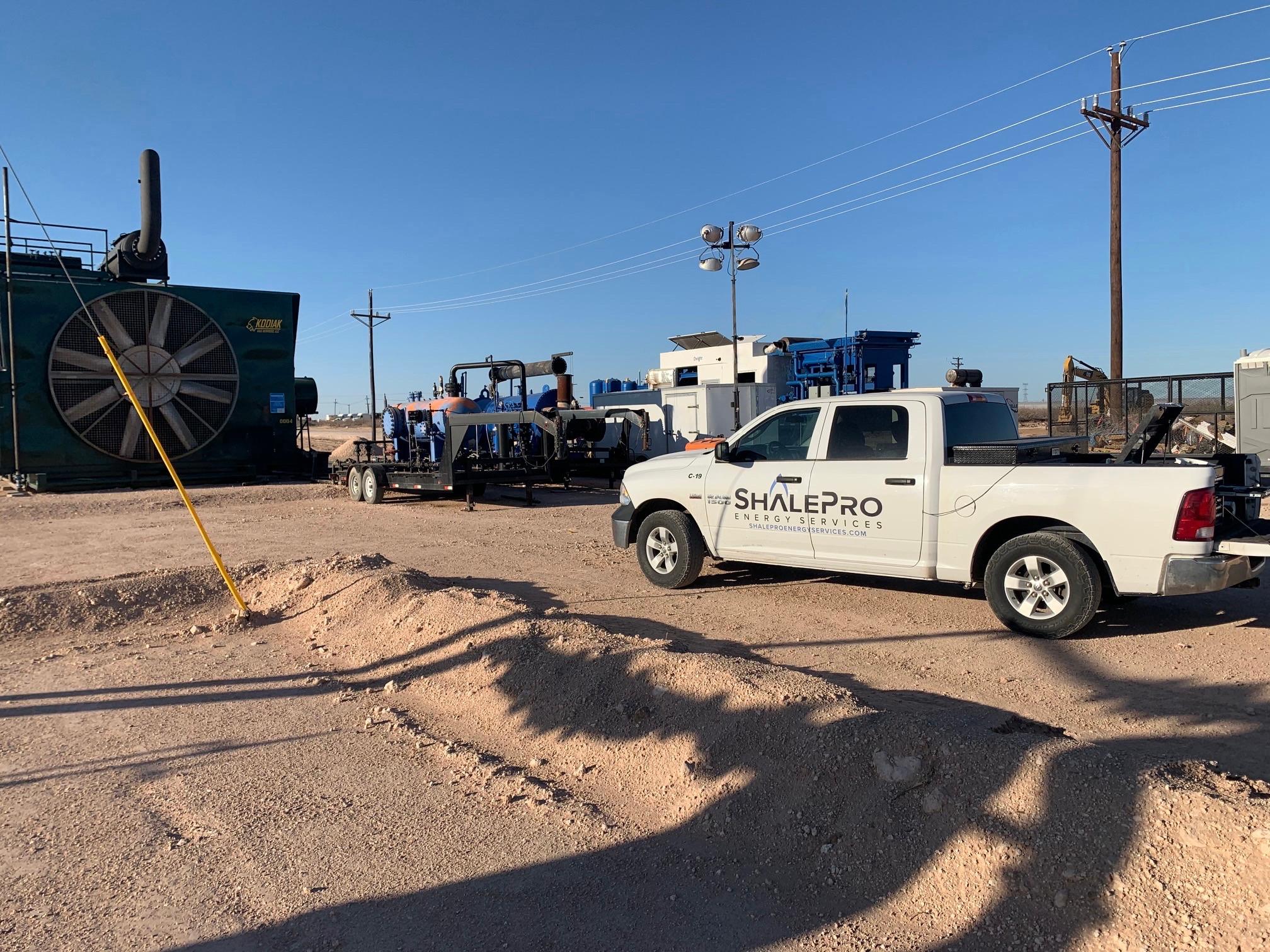
ShalePro provides 24/7 emergency response with crews positioned across seven locations from New York to Tennessee, backed by experience operating hundreds of compressors and more than 2,000 wells. Clear communication protocols keep the operator informed and the pipeline whole during an event.
Integrated Midstream Services and Single-Contractor Value
Integrated midstream services remove coordination gaps because dehydration is one link in a gathering, compression, processing, and pipeline chain. Handling the full chain with one team keeps accountability clear.
| Model | Mobilization | Troubleshooting speed | Accountability |
|---|---|---|---|
| Separate vendors per function | Multiplied per contractor | Slower, cross-vendor coordination | Diffuse, gaps nobody owns |
| Single integrated contractor | One mobilization | Faster, same crew sees whole site | Clear, one team |
Dehydration Within the Full Midstream Chain
Dehydration sits between compression and the sales line, so its performance touches every unit around it. When one team sees the whole workflow, system optimization improves over treating the dehydrator as an isolated box.
One Accountable Team at One Site
When one contractor manages well tending, compression, dehydration, and pipelines at the same site, troubleshooting moves faster and accountability stays clear. ShalePro delivers Well Tending, Compressor Operations, Pipeline and Pigging Services, and Mechanical Construction in-house, so the client works with one accountable team from site prep through long-term maintenance.
compressor operations and maintenance services
Safety Protocols in Dehydration Operations
Safety in dehydration work covers glycol handling, hot work around burners, and confined space entry for vessel maintenance. Each hazard class has a defined control before a crew starts a task.
Federal workplace standards for this work come from OSHA Oil and Gas Extraction, and midstream pipeline safety falls under PHMSA.
Daily Tailgate Meetings and Job Safety Analysis
ShalePro crews hold Daily Tailgate safety meetings and complete a thorough Job Safety Analysis before tasks. That practice forces a crew to name the hazards of hot work near a reboiler or entry into a contactor vessel before anyone picks up a tool.
Leading Indicators and Certifications
A dedicated safety and training team logs more than 500 field safety observations every quarter, running observations and compliance in the field rather than leaving it to the client. The Safety Department is led by Cooper Ferko, who brings more than eight years of industry experience.
Certifications include ISNetworld Certified, Veriforce Preferred, DOT Compliant, OSHA Compliant, and Veriforce SafeLandUSA trained crews.
How to Choose a Gas Dehydration Service Provider
Choose a gas dehydration service provider by weighing regional presence and emergency response time first, then breadth of midstream services, operational scale, and a mature safety program. Crews already in the Basin respond faster than national firms flying in labor.
Here is a practical ranking of decision criteria for Basin operators:
Regional presence and response time. Positioned crews beat mobilized labor in a winter failure. Breadth of midstream services. Fewer contractors means clearer accountability and lower mobilization cost. Operational scale. A provider running hundreds of compressors and thousands of wells has seen your failure mode before. Safety maturity. Leading-indicator programs signal a culture, not a binder. Multi-state regulatory depth. Experience across NY, PA, OH, WV, VA, KY, and TN matters for compliance under agencies like Pennsylvania DEP and the EPA.
ShalePro Energy Services is an energy and industrial services company serving the Appalachian Basin from Houston, Pennsylvania, specializing in mechanical construction, pipe fabrication, helical pile installation, and midstream operations and maintenance. With roughly 300 employees, seven Basin locations, an operating heritage dating to 1994 through Appalachian Production Services, and an operational base of more than 2,000 wells and hundreds of compressors, it brings the regional depth these criteria call for.
Appalachian Basin midstream operations and maintenance
Frequently Asked Questions
What is the difference between TEG and DEG glycol dehydration?
Both triethylene glycol and diethylene glycol absorb water vapor from gas. TEG runs hotter and achieves lower water dew points, which suits most pipeline spec applications. DEG regenerates at lower temperatures. The right choice depends on gas volume, inlet water content, and sales spec targets.
How often should glycol dehydration filters be changed?
Filter intervals depend on glycol contamination, solids loading, and system throughput rather than a fixed calendar. Field-experienced operators assess differential pressure and glycol quality to schedule changes. Letting filters plug drives foam-over and carryover, so active monitoring beats a set-it-and-forget-it schedule in dehydration operations.
Can one contractor handle dehydration alongside compression and pipeline operations?
Yes. A full-service midstream provider can manage well tending, compression, dehydration, and pipeline operations at the same site with one crew. ShalePro delivers these service lines in-house, which speeds troubleshooting and keeps accountability with a single team across the gathering and processing chain.
What causes glycol carryover in a dehydration unit?
Carryover happens when glycol leaves the contactor with the gas stream, often from foaming, high gas velocity, mist eliminator failure, or contamination. It wastes glycol and risks off-spec delivery downstream. Early detection through monitoring and troubleshooting prevents larger losses and sales line problems during dehydration services.
Why does winter increase hydrate risk in Appalachian gas systems?
Cold ambient temperatures across Pennsylvania and West Virginia lower the temperature at which water and gas form hydrates, so wet gas freezes into flow-blocking plugs faster. Winter shutdowns and glycol performance degradation raise the stakes, making rapid emergency response and crew positioning essential.
Keep Your Gas On Spec Year-Round
Wet gas does not wait for business hours, and an off-spec delivery can stop your pipeline revenue cold. The right dehydration partner keeps the unit running, responds fast when it fails, and ties the work into the rest of your station.
Go with the Pro. Talk to ShalePro about gas dehydration and midstream O&M services.
Sources
How Natural Gas is Dehydrated. Kinder Morgan
Natural Gas Dehydration Unit. CECO Environmental
FERC. Federal Energy Regulatory Commission
PHMSA. Pipeline and Hazardous Materials Safety Administration
EPA Oil and Natural Gas Operations